Linen 101 · Fiber, making, and care
From Flax Field to Finished Sheet: Understanding Naturepedic’s Organic Linen
A linen sheet carries a long journey in its threads. Flax must be grown and harvested, its fibers separated from the plant, spun into yarn, woven into cloth, and finished for everyday use. Each stage helps explain what a label can tell us—and what it cannot—about a fabric’s origin, certification, feel, or performance.
Published November 18, 2026
At first glance, a sheet is a simple thing: a rectangle of cloth fitted to a mattress or folded across a bed. But linen begins far from the bedroom, in fields of flax. Between plant and finished fabric lies a chain of agricultural choices, skilled processing, and manufacturing steps. The country where flax grows may not be the country where it is woven, sewn, or finished. A certification can offer meaningful evidence about some of those steps, while leaving other questions unanswered.
Naturepedic’s organic linen bedding offers a useful case for understanding that distinction. Its product information identifies the flax as grown in France, describes the fabric as GOTS-certified organic linen, and notes that the sheets are made in India in a GOTS-certified organic facility. Those statements refer to different parts of a supply chain. Reading them separately makes the story more precise—and helps avoid treating a single label as a complete biography of a sheet.
The plant behind the fabric
Linen is made from the bast fibers of the flax plant, Linum usitatissimum. These fibers run along the plant’s stem, beneath its outer surface. They are not the same as the soft seed fibers used to make cotton, nor are they extracted from flax seeds, which are used for food and oil. Linen’s characteristic strength and texture begin with the structure of the stem fibers themselves.
Flax is an annual crop, grown through a cycle that includes sowing, growth, flowering, and harvest. Its development depends on local soil, weather, agricultural practices, and the intended use of the crop. Growing flax for textile fiber is only the first chapter: the harvested plants still need to be processed before their fibers can be spun. The quality of the final cloth also depends on decisions made later, including how fibers are prepared, how yarn is spun, and how the fabric is woven and finished.
It is tempting to assume that “French flax” means a sheet was made in France. Usually, the phrase identifies where the raw material was grown, not every place through which the finished textile passed. A flax crop may be cultivated in one country, processed or spun elsewhere, woven in another location, and sewn into bedding at a separate facility. Origin language becomes clearer when each stage is named rather than folded into a general claim of provenance.
From harvested stems to usable fiber
After harvest, flax stems undergo processing designed to free the long fibers from the woody material around them. One central step is retting: a controlled process that helps loosen the natural bonds between the fiber-bearing layers and the stem’s core. Depending on the method and production setting, retting may use moisture and microorganisms, water, or other carefully managed approaches. The aim is not to dissolve the plant, but to make separation possible while preserving useful fiber.
Once retting is complete, the stems are dried and mechanically processed. Breaking crushes the woody core; scutching removes much of the broken material; and hackling combs the fibers, separating and aligning them. The longer, finer fibers are generally suited to yarns for smoother textiles, while shorter fibers can be used for other applications. The characteristics of the resulting linen depend on the fiber, the preparation, and the intended yarn—not simply on the plant’s country of origin.
These operations can sound industrial, but they are also a bridge between agriculture and textile craft. Fiber preparation affects how evenly flax can be spun and how the resulting yarn behaves under tension. Variations in fiber length, fineness, and preparation can influence the character of the cloth. The label on a finished sheet rarely provides all these technical details, so it is helpful to treat origin and certification as important pieces of context rather than a full account of manufacturing.
Spinning and weaving: where yarn becomes cloth
Prepared flax fibers are spun into yarn. In spinning, fibers are drawn out and twisted together to form a continuous thread with enough strength and consistency for weaving. The yarn’s construction can affect the surface and behavior of the finished textile. So can the way it is woven. In a basic woven fabric, lengthwise warp yarns cross with widthwise weft yarns, creating a stable structure. Different weave constructions and yarn choices produce different weights, textures, and degrees of drape.
Linen is often associated with a visible, gently irregular texture. That appearance is not a defect by definition; it is part of the material’s character. Yet linen is not one uniform fabric. A sheet’s feel can vary with yarn quality, weave density, fabric weight, washing, and finishing. Two textiles both identified as 100% linen may feel quite different in the hand and behave differently in use.
Naturepedic’s product information gives a fabric weight of 185 grams per square meter for its organic linen sheets. GSM—grams per square meter—is a measure of fabric weight, not a direct rating of softness, quality, breathability, or durability. It can help readers compare textiles when the numbers are provided on a consistent basis, but it should not be used alone to predict comfort. Weave, yarn, finishing, and personal preference remain part of the picture.
Finishing shapes the first impression
After weaving, linen may be washed, softened, dyed, or otherwise finished to prepare it for its intended use. A stone-washed or garment-washed fabric, for example, may have a more relaxed feel from the outset than an unfinished cloth. Finishing can affect how a textile looks and feels when new, but it does not erase the underlying properties of the fiber. Nor does the word “soft” on its own reveal which process was used or how the fabric will change over time.
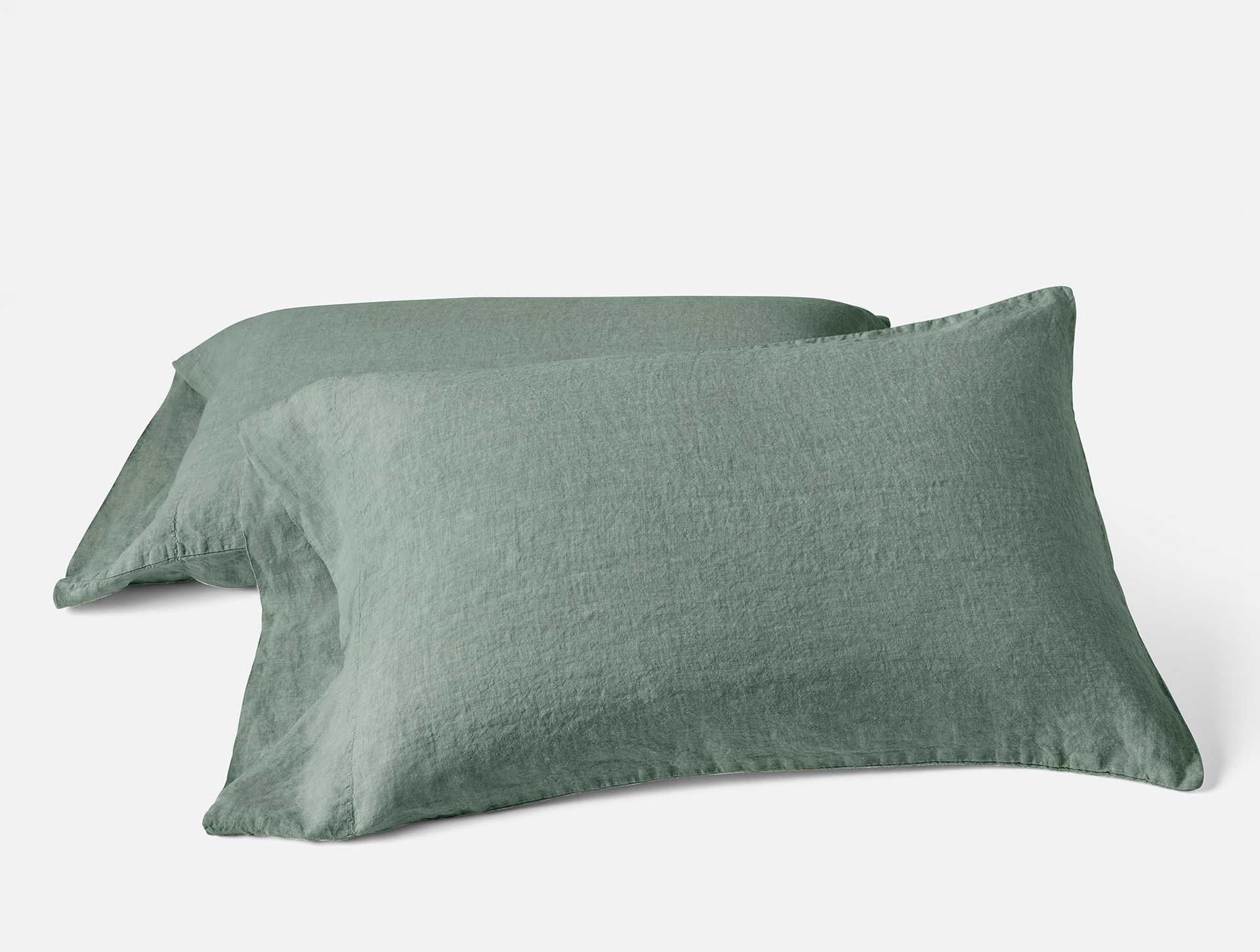
Naturepedic describes its sheets as stone-washed and says the linen becomes softer with washing. Its product details also list a palette of earth-toned colors and describe the fabric as breathable. These are useful product-specific statements, but they should be read as descriptions of the particular bedding, not universal guarantees about every linen textile or every sleeper’s experience. Comfort varies with climate, bedding layers, room conditions, and individual preference.
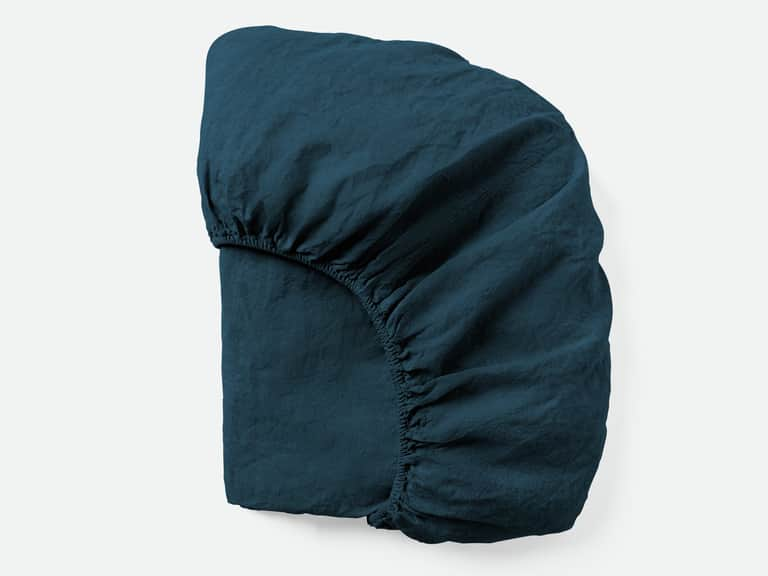
Finishing and sewing add practical details beyond the fabric itself. Naturepedic’s sheet set is described as including a flat sheet, a fitted sheet, and two pillowcases, with a 15-inch pocket on the fitted sheet. Product specifications also give pillowcase and sheet dimensions by size. Those measurements can be more immediately useful to a household than broad words such as “luxury” or “premium”: a fitted sheet’s pocket depth, for example, helps determine whether it is likely to fit a particular mattress.
What GOTS certification tells you
GOTS, the Global Organic Textile Standard, is a certification system for textiles made from organic fibers. It addresses defined requirements for organic fiber content and processing across the supply chain, with attention to environmental and social criteria. In practical terms, a GOTS claim offers more structured information than the word “organic” used alone, because certification involves standards and verification rather than relying solely on an unqualified description.
Still, certification is not a complete account of everything a buyer might want to know. It does not, by itself, tell you whether a particular sheet will feel crisp or soft, how warm it will feel in your room, how it will drape, or whether you will enjoy its natural texture. It also does not mean that every production stage occurred in the same country. For that, readers need to examine the product’s separate statements about fiber origin, manufacturing location, and the scope of its certification.
In Naturepedic’s case, the supplied product details describe the linen as GOTS-certified organic and identify the flax as grown in France. They also say the sheets are made in India in a GOTS-certified organic facility. These are complementary details, not contradictory ones: one identifies the agricultural origin of the flax, while another identifies where the bedding is made. A country-of-origin phrase should not be stretched to imply a complete map of every processing step unless the manufacturer provides that information.
Certification claims are most useful when they are specific and verifiable. Readers can look for the name of the standard, whether the claim applies to the fiber or finished product, and whether a certificate or certification number is provided. If a detail matters to a purchase decision, it is reasonable to consult the manufacturer’s current documentation. Standards and product specifications can change, and a short product description may not include every detail of a complex supply chain.
What linen can—and cannot—promise about comfort
Linen is widely valued for its breathable feel and ability to manage moisture. Its woven structure and flax fibers can allow air and moisture to move through the fabric, which many people find comfortable across changing temperatures. But “temperature regulating” is not a promise that linen controls body temperature or guarantees a particular sleep outcome. Bedding interacts with a person’s sleepwear, mattress, duvet, bedroom climate, and individual comfort needs.
Likewise, describing linen as durable does not mean it is immune to wear. Repeated laundering, rough handling, overloaded machines, excessive heat, and unsuitable detergents can affect any textile. Care instructions are part of the product’s design story: they communicate the manufacturer’s recommended way to clean the fabric while helping preserve its condition. For Naturepedic’s linen sheets, the supplied directions specify warm machine washing, tumble drying on low, warm ironing if desired, and no bleach.
These directions differ from those given for some other organic linen bedding, which may call for cold water and a gentle cycle. That difference is a reminder to follow the care label for the specific item in hand rather than assume that one generic linen routine suits every finish. When in doubt, the product’s sewn-in label or current manufacturer instructions should take precedence over general advice.
A practical guide to reading the label
A useful label is a starting point for questions, not a substitute for asking them. When considering linen sheets, break the information into several parts. That makes it easier to compare products without allowing a single appealing phrase to stand in for the whole supply chain.
- Fiber: Check whether the fabric is described as 100% linen or as a blend. Linen is made from flax; a blend may combine it with another fiber and will have different care and performance characteristics.
- Fiber origin: Look for an explicit statement about where the flax was grown. Do not assume this is also the location where yarn was spun, fabric woven, or bedding sewn.
- Manufacturing: Note any stated country of weaving or finished-product manufacture. If those stages are not specified, the label may not provide a complete production map.
- Certification: Identify the named standard and what the claim applies to. “GOTS certified” is more specific than a general sustainability phrase, but it does not answer every question about feel or care.
- Fabric weight and construction: Use GSM, weave descriptions, and construction details as comparison points—not as standalone verdicts about quality or comfort.
- Dimensions and fit: Check mattress depth, fitted-sheet pocket size, and pillowcase dimensions. A natural fiber cannot compensate for a poor fit.
- Care: Follow the instructions supplied for that product. Washing temperature, drying method, and bleach guidance can vary with the fabric and finish.
The finished sheet is a chain of decisions
Following flax from field to bed reveals why a single word—“organic,” “French,” or “linen”—cannot carry the entire story. Fiber origin points toward agriculture. Weaving and manufacturing locations describe distinct production stages. Certification indicates that defined requirements have been met within a standard’s scope. Weight, construction, finish, dimensions, and care instructions speak to other practical questions.
Naturepedic’s organic linen illustrates how these clues can be read together: the product information identifies French-grown flax, GOTS certification, a 185 GSM fabric, stone-washed finishing, and manufacture in India at a GOTS-certified organic facility. Those details provide a more grounded picture than a broad claim of “natural luxury,” while still leaving room for questions about specific processes and personal comfort.
In the end, a finished sheet is both an agricultural product and a manufactured textile. Understanding that journey does not make the pleasures of linen less immediate. It makes them easier to assess. The softening fabric on a bed is the result of a plant, a series of transformations, and a set of choices that labels can illuminate—if we read them carefully.
Quick answers
Does French flax mean the sheets were made in France?
Not necessarily. It generally identifies where the flax was grown. The fiber may be processed, woven, and made into bedding in other countries. Naturepedic’s product information identifies French-grown flax and states that the sheets are made in India.
Does GOTS certification tell me how linen will feel?
No. GOTS addresses defined organic-fiber and processing requirements. Feel also depends on yarn, weave, finishing, fabric weight, laundering, and personal preference.
Does a higher GSM always mean a better sheet?
No. GSM measures fabric weight per area. It can help with comparisons, but it does not independently establish softness, breathability, durability, or suitability for a particular sleeper.