Textile Guide · Bath Robes
Choosing a Bath Robe: How Fabric Weight, Absorbency, and Care Shape Comfort
A bath robe is part towel, part layer, and part daily ritual. Its comfort depends on more than a soft first touch: fiber, fabric weight, weave, fit, and laundering all shape how it behaves after a shower and how it feels over years of use.
Some robes are made to take the place of a towel, soaking up water when you step from the bath. Others are light coverings for a slow morning, a cool evening, or the few minutes between getting dressed. The distinction matters. A dense cotton terry robe may absorb generously but take time to dry; a lightweight linen robe can feel airy and dry more readily, yet may not provide the plush, towel-like sensation everyone expects.
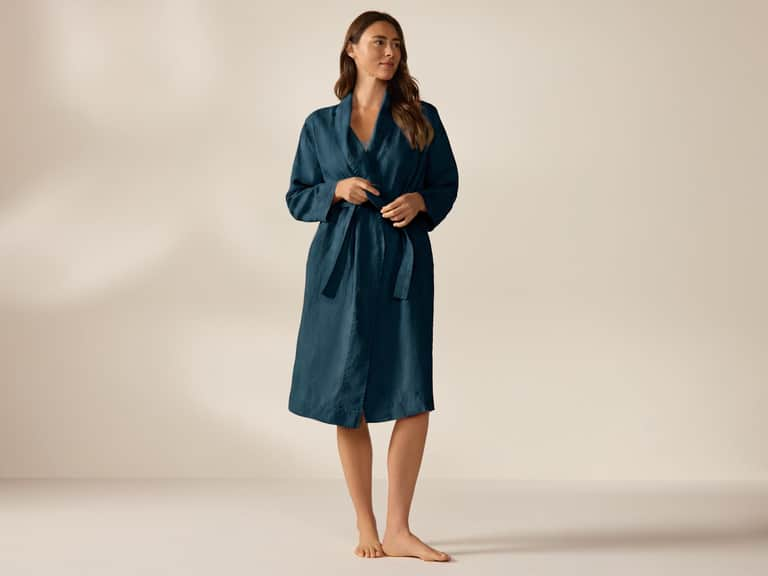
Choosing well begins with a practical question: what do you want the robe to do? Once that is clear, fabric weight and absorbency become easier to assess. Construction determines how those properties feel in motion, while care habits influence whether the robe stays comfortable and useful. In the Bath Robes category, Coyuchi’s Women’s Organic Relaxed Linen Robe offers a useful example of linen as a robe fabric: an organic linen wrap with long sleeves, a shawl collar, pockets, and an adjustable self-tie belt.
Start with the job the robe needs to do
“Bath robe” can describe several different garments. A robe worn directly after bathing has a different assignment from one pulled on over dry sleepwear. The first is expected to manage moisture; the second may be valued more for coverage, ease of movement, and a comfortable layer against the skin. Some people want both functions, but no single fabric automatically excels at every one.
Think through your routine. Do you put the robe on while your skin is still damp, or do you towel off first? Will you wear it briefly in a warm bathroom, or for an hour in a cool house? Is easy laundering a priority? Do you prefer a substantial wrap or a garment that packs lightly and does not feel heavy on the shoulders? These answers are more useful than a general promise of “luxury” or “softness.”
For post-shower drying, a robe needs enough surface area and absorbent structure to take up moisture. For lounging, the priorities may shift toward breathability, drape, and freedom of movement. If the robe is meant to serve both purposes, consider whether you are comfortable using a towel first and letting the robe provide warmth and coverage afterward.
What fabric weight tells you—and what it does not
Fabric weight is commonly expressed as grams per square metre, or GSM. A higher figure generally means more material by area, but it does not, by itself, tell you precisely how warm, absorbent, soft, or durable a robe will feel. Fiber type, yarn thickness, weave or knit, surface texture, and finishing all influence the result. Two textiles with similar weights may behave quite differently.
In broad terms, heavier robes tend to feel more substantial and may provide more coverage and insulation. They can be appealing in a cool climate or for someone who enjoys a wrapped, towel-like feel. That extra material has a trade-off: a heavy robe can take longer to dry, occupy more storage space, and feel cumbersome when damp. Laundering and drying may also require more time and room.
Lighter robes are usually easier to move in and can feel less enclosing, particularly in a warm room. They may dry faster and take up less space, although a light fabric may not provide much warmth and may not absorb a large amount of water. A thin robe should not be judged as a failed towel if its intended role is to provide a breathable layer after toweling off.
Weight should therefore be read alongside the garment’s stated fiber and construction. If a product description does not give a GSM figure, assess the robe through other available details: fabric composition, whether the surface is terry or smooth, how the garment is finished, and what the care label recommends. Where possible, handle the textile or review a return policy before making a decision; weight is most meaningful when connected to a real use case.
Absorbency is a property of the whole textile
Absorbency is often treated as a simple contest between fibers, but the finished fabric matters just as much. Terry cloth uses loops that create a large surface area for capturing water. A robe made from terry cotton is consequently associated with towel-like drying, though its performance still depends on the yarn, pile, density, and finishing. A smooth woven textile has a different structure and may not hold water in the same way.
Linen is made from flax fiber. In a robe, it is often chosen for its relatively light, breathable character and its textured drape rather than for the thick, plush pile of terry. It can absorb moisture, but a smooth linen robe should not be assumed to perform like a heavy bath towel. For many routines, the distinction is straightforward: towel off first, then use linen as a breathable covering. For others, a more absorbent robe construction may be the better fit.
Fiber labels also deserve careful reading. “Cotton,” “linen,” and blends indicate composition, but not necessarily the textile’s specific performance. A cotton robe might be woven, knitted, or looped; a linen garment might be airy and lightweight or made in a denser construction. Blends can combine characteristics, but their actual feel depends on proportions and design. Look for complete material information rather than relying on a broad fiber name or a marketing adjective.
Absorbency is not the same as drying speed. A fabric that takes up water readily may also retain more of it and need longer to dry. A garment that feels light and dries quickly may offer less immediate water absorption. Considering both properties helps set realistic expectations and prevents a mismatch between a robe’s construction and the way you plan to use it.
Construction shapes fit and everyday usefulness
A robe is worn in motion, so its design details matter. A wrap closure with a self-tie belt allows the fit to be adjusted, but the belt needs to stay secure during ordinary movement. Belt loops help keep it in place. A shawl collar can add coverage around the neck, while sleeve length and cuff shape affect whether the garment feels easy to wear while preparing for the day.
Pockets are more than decoration if the robe is used around the house. Check their placement and depth, especially if you plan to carry small items. Seams and hems also influence durability: clean finishing and secure stitching help a garment withstand regular wear and laundering. A generous fit can make layering easier, but sizing should still allow comfortable movement without excessive fabric dragging or catching.
The Coyuchi linen robe provides a concrete example of these choices. Its listed construction includes a wrap design with a self-tie belt, shawl collar, long sleeves, on-seam pockets, and dog-eared belt loops. These features describe how the robe is arranged and worn; they do not establish a particular absorbency level or fabric weight. Those qualities should be evaluated separately, using the available fabric information and the intended routine.
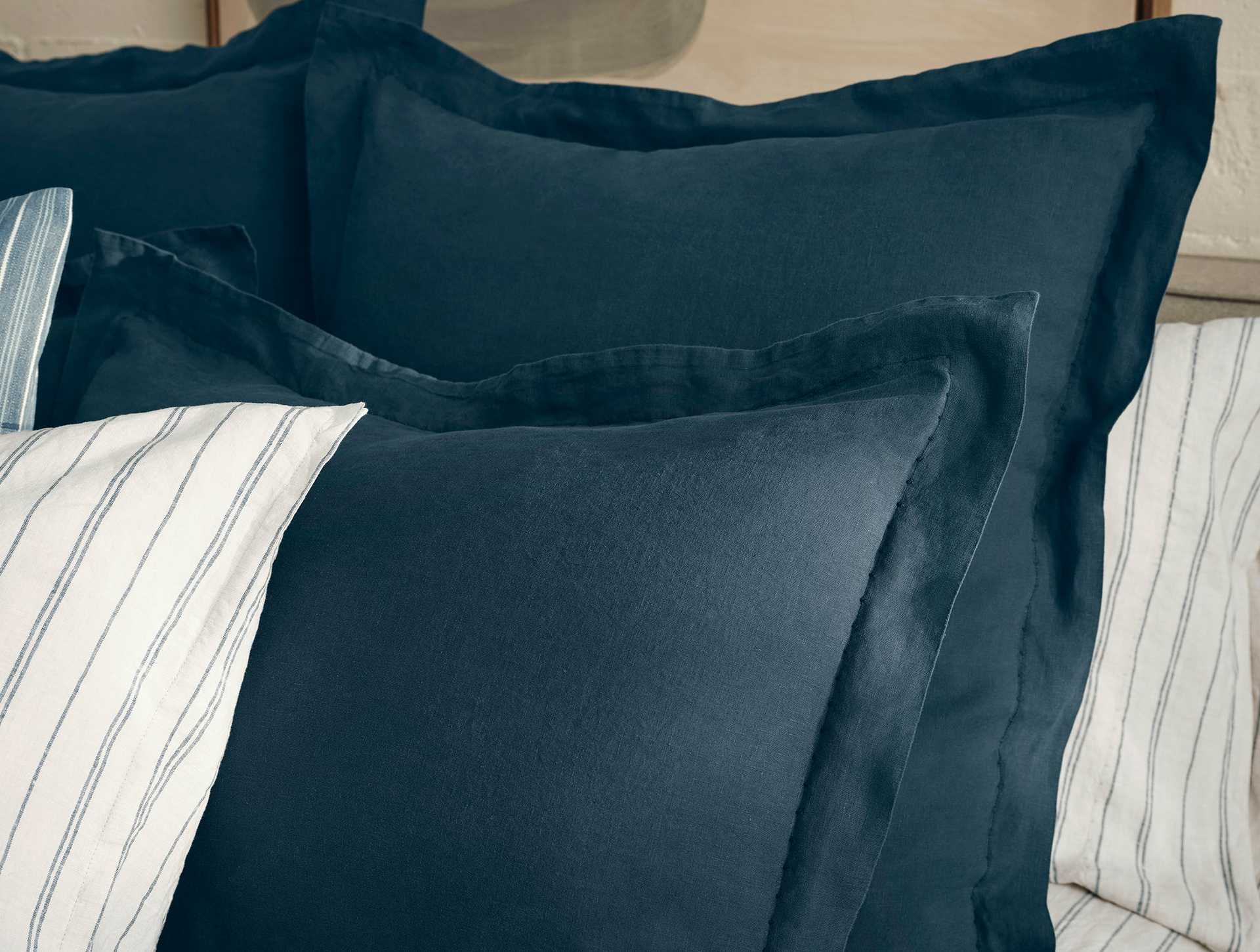
It is also worth distinguishing robes from bedding or decorative textiles. A linen sheet or sham may share a fiber with a robe, but the garment’s seams, cut, closures, and contact with a damp body create different demands. A useful textile decision takes the whole object into account, not simply the word “linen” on a label.
Linen, cotton, and the feel of natural fibers
Natural fibers are not interchangeable, and personal preference is central. Linen often has a distinct, slightly textured hand and a relaxed drape. Its appearance may remain naturally creased rather than pressed smooth. Some wearers appreciate that lived-in quality; others prefer the plush surface associated with terry cotton. Comfort is not a ranking. It is the relationship between a textile and the person using it.
Cotton terry is a familiar option when the priority is absorbing water and feeling wrapped in a soft, substantial surface. Depending on its weight and construction, it can be warm and enveloping. It may also require more drying time than a lighter garment. Smooth cotton weaves, meanwhile, can feel quite different from terry despite sharing the same primary fiber.
Linen’s appeal often lies in its airy character and tactile texture. It can suit someone who dislikes a bulky robe or wants a light layer over dry skin. Its hand may change with washing and wear, so follow the maker’s instructions and allow for the possibility that the first impression is not the final one. Claims about a fabric becoming softer should not replace practical questions about care, fit, and intended use.
Certification and origin information can add context about how a textile was produced, but they do not guarantee that a robe will suit every wearer. For example, the Coyuchi robe is described as GOTS certified, with linen grown in France and woven in Portugal. Such details can help readers understand sourcing and production claims. They are separate from the questions of how absorbent, warm, or comfortable the finished garment feels to an individual.
Care labels are part of the comfort equation
Even a well-chosen robe can become unpleasant if detergent residue builds up, fibers are exposed to excessive heat, or the garment is stored before it has dried completely. Care is not an afterthought: it affects texture, freshness, and the useful life of the fabric. Start with the garment’s own care label, since recommended methods vary by fiber, finish, dye, and construction.
The listed care instructions for the Coyuchi linen robe call for machine washing cold on a gentle cycle with like colors, tumble drying on low, and removing the robe promptly. A warm iron may be used if desired. These directions are specific to that garment and should take precedence over generic linen advice. A different robe—especially one with another fiber blend, trim, or finish—may require different handling.
In general, avoid overloading the washer. Textiles need room to move and rinse thoroughly. Use an appropriate amount of detergent; more is not necessarily better, and residue can leave fabric feeling coated or stiff. Separate colors when needed, and attend to stains promptly according to the label. Fabric softener is not a universal solution: it may leave a coating, and some products have instructions that explicitly prohibit it.
Drying deserves equal attention. Remove a robe when the cycle ends rather than leaving it compressed in the machine. If line drying is suitable for the garment, ensure that it is supported and can dry fully. If using a dryer, respect the recommended temperature and avoid unnecessary over-drying. Excessive heat can stress fibers and may affect fit or surface feel. Never store a damp robe in a closed cupboard or laundry hamper for an extended period.
Between washes, hang the robe where air can circulate. A crowded hook or humid bathroom can slow drying. If a robe is used directly after bathing every day, a second garment or a well-ventilated drying place may help keep the routine comfortable. Washing frequency depends on use, climate, and personal preference; cleanliness and complete drying matter more than following a fixed calendar.
A practical checklist before choosing
Before settling on a robe, compare its specifications with your habits rather than with an abstract ideal of softness. These questions can make the decision clearer:
- When will you wear it? Immediately after bathing, over dry clothing, or for both purposes?
- How much water should it absorb? If you want a towel substitute, look for a construction designed for substantial absorption, such as terry, and confirm the garment’s details.
- How much warmth do you prefer? A heavier robe can feel more enclosing, while a lighter one may suit warm rooms and easy movement.
- What does the fabric description actually say? Check fiber content, weave or surface, and any stated weight instead of relying on broad claims.
- Will the fit work for you? Consider sleeve length, wrap overlap, belt placement, pockets, and room to move.
- Can you follow the care instructions? Think about your washer, dryer, drying space, and willingness to iron if desired.
- Are sourcing or certification details important to you? Treat them as useful context, while evaluating comfort and function on their own terms.
Where a specification is missing, do not fill the gap with assumption. Ask the retailer or manufacturer, consult the complete product details, or choose a robe whose stated construction better matches your needs. A missing weight figure does not automatically mean poor quality; it simply means weight cannot be used as a point of comparison.
Comfort is a routine, not a single number
There is no universally correct fabric weight for a bath robe. A cool bathroom, a warm climate, a preference for towel-like softness, and a desire for lightweight coverage all lead to different choices. A number on a label can guide comparison, but it cannot predict every aspect of touch or performance. The textile’s structure and the way it is cared for remain part of the story.
For someone seeking a light, textured layer after drying off, linen may be a thoughtful option. For someone who wants to step straight from the shower into a highly absorbent wrap, a terry construction may be more appropriate. Neither preference is more sophisticated; each describes a different task. The most satisfying robe is the one that fits the routine it is actually asked to serve.
When evaluating a garment such as Coyuchi’s Women’s Organic Relaxed Linen Robe, consider the details together: organic linen, a relaxed wrap silhouette, a shawl collar, long sleeves, pockets, and a care routine that calls for gentle washing and low-temperature drying. Then decide whether those features match your expectations for a robe. Knowing what a garment is designed to do—and what it is not described as doing—turns a vague purchase into an informed textile choice.
Frequently asked questions
Is a linen robe absorbent enough to wear after a shower?
It depends on its construction and how wet you are when you put it on. Linen can take up moisture, but a smooth, lightweight linen robe is not automatically equivalent to a dense terry towel. Many people towel off first and use linen as a breathable covering afterward.
Does a heavier robe always feel warmer?
More fabric can create a more substantial, insulating feel, but weight alone does not determine warmth. Fiber, weave, fit, and room conditions matter. A dense robe may also take longer to dry and feel cumbersome when damp.
Should a linen robe be ironed?
Follow its care label. The Coyuchi robe’s listed instructions allow warm ironing if desired, so pressing is optional for that garment. Linen’s natural creasing is also part of its characteristic appearance.
What is the most important detail to check?
Begin with intended use, then verify the fiber content, fabric construction, fit, and care instructions. Fabric weight can be helpful when provided, but it should not be treated as a complete measure of comfort or absorbency.